

Articles

Why Enterprise Companies Need UX Research Before Deploying AI Agents
Gartner estimates 30% of generative AI projects get abandoned after proof of concept. With agentic AI, the failure rate risks running higher because agents don't just give bad answers, they take bad actions. Research before deployment typically costs 5-8% of the implementation budget. Skipping it costs 3-5x the original implementation to fix. The math favors doing the research first.




Your research tools got smarter…Did you?
AI tools can run your surveys, transcribe your interviews, and cluster your themes. What they cannot do is tell you what it means for your business. The strategic layer of research is wide open.

Why Utility Companies Are Losing Millions on Digital Transformation (And How Customer Research Fixes It)
Utility companies spend $50M+ on digital portals that customers hate. Learn why customer research is essential to digital transformation ROI — and how to get it right.

The most important AI mindset shift no one is talking about
Lately, I've seen a shift in the market… one that gives me hope for the future. Instead of asking, "How can we put AI into our product?" the new question to ask is, "How might we solve customer problems with AI?"

The Research “Impact Problem”
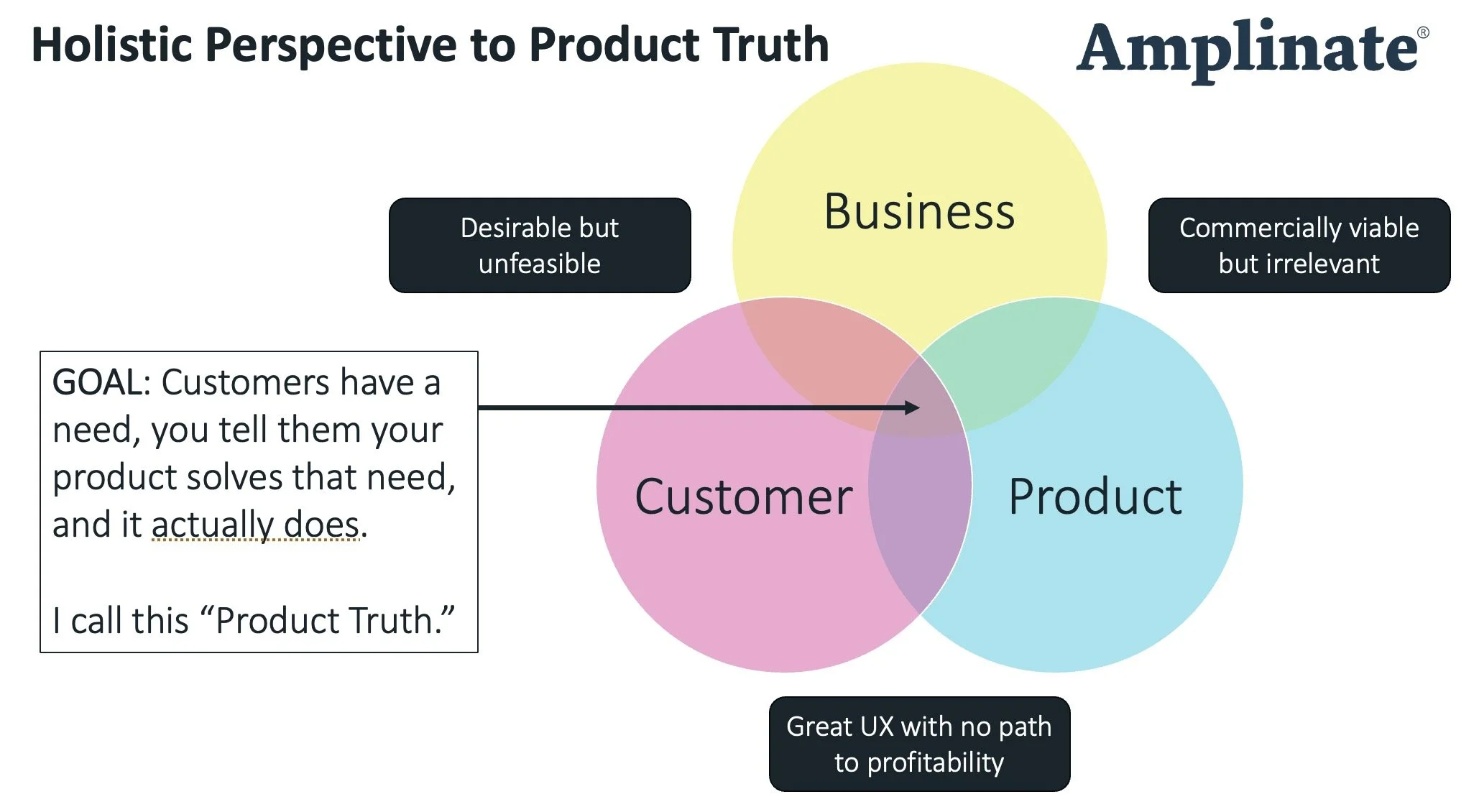
The article discusses the “Impact Problem” faced by qualitative UX researchers in Big Tech, highlighting the tension between achieving measurable business outcomes and maintaining the integrity of user experience research. It outlines the challenges of communicating the value of qualitative insights in a business environment that prioritizes quantitative metrics and ROI, often leading to a disconnect between UX professionals and business stakeholders. The author calls for a paradigm shift towards better integration and acknowledgment of qualitative research within business strategies, advocating for mixed methods approaches and greater collaboration across disciplines to truly measure and understand impact.

Speaking English so non-native colleagues understand
Acknowledging the privilege of speaking English natively is a vital first step on the path to becoming a better English speaker to your non-native English-speaking colleagues.
What makes us different, brings us together. Miscommunications are an opportunity to ask questions and learn from the other person about how they see the world.

Peeling back the layers of Inclusive Design
Inclusive Design work is a virtuous cycle; no matter where you start, every step you take brings you and your team closer to building an inclusive product.